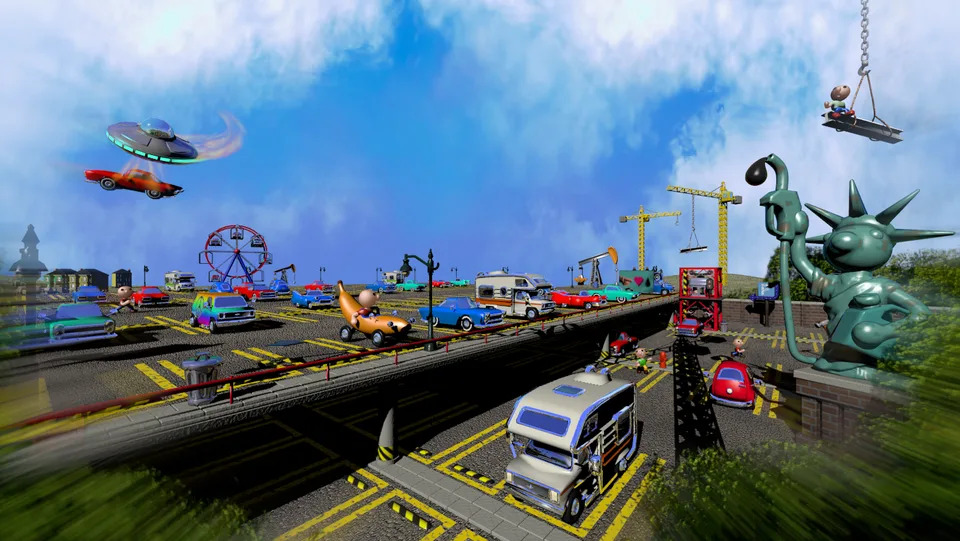
Car Park Capital Strategy Guide: From First Lot to Parking Empire
Master Car Park Capital with this comprehensive guide on lot design, propaganda tactics, and urban expansion to build your ultimate parking empire.
Published: Car Park Capital Wiki Editorial Team
Video Guide
I Built GIANT Parking Garages to SCAM Customers! (Car Park Capital)Table of Contents
Getting Started: Laying the Foundation
Car Park Capital, developed by Hilkojj Interactive and published by MicroProse, challenges you to reshape a city through the lens of car dependency. As you step into this satirical management sim, your primary goal is to transform empty urban plots into profitable parking hubs. The game officially launched into Steam Early Access on October 9, 2026, and provides a deep, systems-driven experience that rewards careful planning over impulsive expansion.
For beginners, the most common mistake is attempting to build too much, too fast. Success in this game relies on understanding the relationship between lot flow, local demand, and community sentiment. Instead of buying up large chunks of the map immediately, start small. A single, well-designed lot in a high-traffic area—such as near existing shops or transit hubs—is far more effective than a sprawling, inefficient parking project on the outskirts of town.
Designing for Efficiency: The Pillars of Lot Management
Effective lot design is about more than just placing pavement. You must consider the internal flow of vehicles to ensure your customers can enter, park, and exit without causing bottlenecks. According to community reports and early gameplay analysis, a simple grid layout remains the gold standard for your first hour of play.
Identify High Demand: Look for areas near office buildings or commercial zones where traffic naturally congregates.
Map the Grid: Place a clean, manageable grid of standard bays. Avoid complex, winding designs that confuse AI pathfinding.
Optimize Access: Always pair your entrance with a ticket barrier and ensure your exit has sufficient payment stations to prevent long queues.
Monitor Flow: Spend time watching how vehicles behave. If cars are circling or queuing at the exit, you need to add more payment processing capacity.
Why does this matter? Poor flow leads to frustrated drivers and lost income. In a game where every vehicle represents a potential fee, efficiency is your primary revenue multiplier.
Mastering Community Sentiment with Propaganda
One of the most unique aspects of Car Park Capital is the propaganda system. You are not just a business owner; you are a social engineer. Community resistance can significantly inflate the price of land and delay your ability to build. By utilizing propaganda campaigns, you can shift public opinion in your favor.
Tip
Prioritize your propaganda spending. Always launch campaigns in a target district before you attempt to acquire resistant land. This proactive approach slashes your compensation costs and streamlines the approval process for new structures.
According to veteran players, you should pick your battles wisely. Focus your initial propaganda efforts on commuter-friendly groups. Leave organized opposition, such as cycling advocates, for later in the game when your propaganda machine is fully upgraded and you have the capital to absorb the costs of resistance.
Scaling Your Empire: When to Go Vertical
Once you have established a steady income from your initial surface lots, you will eventually face a scarcity of land. This is the natural transition point into mid-game strategies. As urban density increases, you should shift your investment from simple surface bays to more advanced structures.
Multi-Storey Car Park
Best for mid-game expansion on small, high-value plots where surface space is no longer available.
Underground Garage
The ultimate solution for dense city districts, allowing you to multiply capacity without sacrificing ground-level real estate.
Before going vertical, ensure your road network can handle the increased volume. A multi-storey garage is only profitable if the cars can actually reach it. If you find your roads clogged, consider upgrading your infrastructure before committing to larger parking structures.
Advanced Tactics: Managing Vehicles and Demand
Every vehicle in the game has a specific footprint and behavior. A one-size-fits-all approach to bay size will lead to inefficiency. You need to observe the vehicle mix in your district—are there mostly compact cars, or is the area dominated by delivery trucks?
Vehicle Type
Size
Design Consideration
Compact Car
Small
Fits well in dense, standard-bay grids.
Sedan
Medium
The core income driver; standard bays are sufficient.
SUV / Van
Large
Requires wider bays or edge-positioning for easier turns.
Delivery Truck
Extra Large
Needs dedicated zones with specific access routes.
Mismatched bays cause vehicles to circle the lot, creating congestion that kills your throughput. By tailoring your lot layout to the specific traffic mix of the neighborhood, you ensure every bay earns its keep.
FAQ: Common Beginner Questions
How do I handle subway stations that compete with my lots?
You can purchase and delete existing subway stations to force residents to rely on cars. This is often a core objective for reaching higher levels of "car dependency."
Is there a penalty for being unethical?
The game is a satire of corporate greed. While aggressive expansion and evicting residents to make room for parking lots will cause civil unrest and riots, these are mechanics you must manage with police and riot control, rather than moral hurdles to avoid.
What should I prioritize for my first reinvestment?
Always prioritize flow. If your lot is full but the exit is jammed, invest in more payment stations or better lighting to increase the speed at which cars can leave.