Car Park Capital Drive-Thru Loops: Optimal Layout Guide
Master drive-thru loops in Car Park Capital. Discover optimal queue routing, service clustering, and traffic management to maximize profits in Early Access.
Published: Car Park Capital Wiki Editorial Team
Table of Contents
Designing Efficient Drive-Thru Loops in Car Park Capital
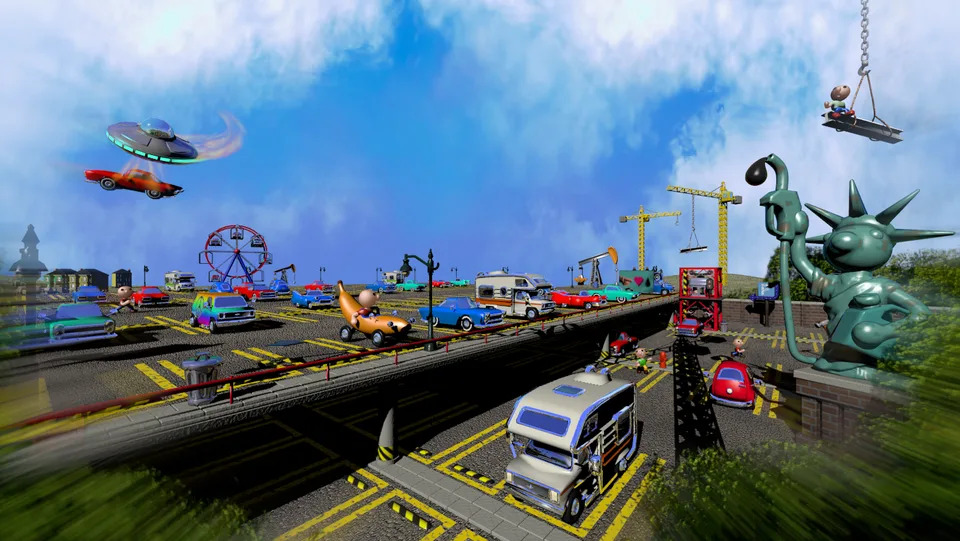
In Car Park Capital on Steam, your mandate from Big Auto is simple: eradicate walkable spaces, turn neighborhoods into asphalt, and satisfy every human urge directly through an open car window. To keep your cash register ringing, citizens must fulfill their daily needs—such as food, entertainment, fuel, and the infamous Giant Toilet Drive-Thru—without leaving the driver's seat.
However, cramming dozens of vehicles into service areas presents a massive civil engineering challenge. If a diner or roadside restroom backs up, the resulting queue blocks primary traffic arteries, paralyzing multi-story parking garages and collapsing town-wide mobility. Mastering the art of the drive-thru loop ensures your patrons consume goods smoothly, pay high fees, and immediately return to circulating through your paid parking grid.
A well-constructed drive-thru loop isolates idling customer vehicles from moving traffic. Instead of placing drive-thru buildings directly adjacent to primary two-lane thoroughfares, you must divert customers into dedicated, looping slip roads designed to hold heavy wait-lists during peak demand hours.
Why Traditional Road Layouts Fail for Drive-Thrus
Placing drive-thru buildings directly alongside main avenues is the fastest way to trigger catastrophic traffic gridlock. In Car Park Capital, citizen AI continuously tracks personal satisfaction bars. When hunger or restroom needs cross critical thresholds, drivers immediately recalculate pathfinding toward the nearest relevant drive-thru facility.
If your facility only features a two-tile curbside entry, three stopped cars will cause the entire line to bleed back onto the feeder avenue. The resulting stoppage prevents commuter traffic from reaching car vending machines, stalls delivery trucks hauling crude oil or cattle, and traps paying customers inside your multi-level garages.
Warning
When traffic gridlock freezes arterial intersections for prolonged periods, citizen happiness drops rapidly. Stalled commuters produce spikes in Civil Unrest, attracting anti-car protests that can physically blockade your profitable retail zones.
Community reports and early player testing confirm that treating drive-thru amenities like standard destination buildings is an expensive design flaw. Instead, successful magnates treat every drive-thru structure as an independent traffic junction requiring its own dedicated circulatory loop.
Blueprint: Building an Overflow-Proof Drive-Thru Loop
Constructing an efficient loop requires careful parcel preparation, calculated road zoning, and strict lane hierarchy. You must demolish existing residential plots to ensure you have enough flat asphalt footprint for the entire sequence.
Clear and Zone the Parcel: Evict suburban tenants or bulldoze historical downtown blocks using 3D construction tools to clear at least an 8x8 building footprint.
Branch the Deceleration Inflow: Construct a one-way feeder ramp breaking off from your high-capacity avenue, angling inward at 45 degrees to prevent incoming braking cars from slowing highway speeds.
Lay the Serpentine Buffer: Draw a winding, continuous one-way loop that wraps around the perimeter of the plot, providing at least 6 to 10 vehicle lengths of queuing asphalt before the service window.
Place the Service Window Node: Snap the target drive-thru amenity (such as a Diner or Giant Toilet Drive-Thru) onto the interior curve of the loop, ensuring the serving window directly abuts the active lane.
Add a Parallel Bypass Lane: Run an unobstructed secondary lane parallel to the service stall so full-capacity queues or broken-down vehicles cannot permanently brick the loop.
Route into Paid Parking: Connect the loop exit not back to the highway, but directly toward the entry gates of an adjacent parking garage or car vending plaza to capture secondary revenue.
By wrapping the approach road around the building footprint before hitting the order window, you absorb sudden demand surges during morning commutes or lunch rushes without disrupting overall urban flow.
Managing Different Service Types and Footprints
Not all drive-thru facilities generate identical queue behaviors. Depending on the resource cycle and transaction duration, you will need to adjust your loop architecture.
Fast-Food Diners
Demand Surge: Spikes heavily during mid-day intervals when citizen hunger bars deplete simultaneously.
Supply Dependency: Requires regular deliveries of ground beef from your meat grinders and soft drinks from industrial processing plants.
Loop Strategy: Needs a double-wide serpentine queue lane to handle high transaction volumes without spilling onto city boulevards.
Giant Toilet Drive-Thrus
Demand Surge: Sporadic but highly urgent; citizens prioritize this need over all retail activities when critical.
Supply Dependency: Low continuous material input, but generates heavy local pollution and dissatisfaction if poorly managed.
Loop Strategy: Build short, high-turnover teardrop loops near highway off-ramps to process drivers instantly and route them directly to paid spaces.
Drive-Thru Gas & Refineries
Demand Surge: Constant baseline demand determined by average fleet mileage and oil extraction rates.
Supply Dependency: Requires direct pipeline links or fuel-tanker delivery routes running from crude refineries.
Loop Strategy: Multi-island layout featuring wide exit radii, preventing long commercial tanker trucks from wedging against passenger sedans.
Tailoring the loop design to match each building's transaction profile ensures you do not waste valuable asphalt space on oversized loops for quick stops, or cause massive tailbacks at slower retail counters.
Segregating Supply Chains from Customer Queue Loops
A common mistake highlighted in player experiences is allowing delivery trucks to share customer drive-thru loops. In Car Park Capital, your drive-thrus are not magical dispensers; they are the end nodes of complex, industrial supply chains. Diners require cows sent to slaughterhouses and meat grinders, while gas stations require crude oil pumped from drill sites and refined into fuel.
Delivery trucks move slower, have wider turning radii, and take longer to unload goods than a sedan takes to collect a takeaway burger. If an industrial logistics truck gets stuck in a customer drive-thru loop behind ten hungry drivers, the diner will run out of stock before the truck ever reaches the loading dock.
Tip
Always build a dedicated rear access alley exclusively zoned for heavy industrial haulers. Connect this service alley directly to your factory and refinery corridors, completely bypassing the consumer queue loop.
Keep the front window for customer sedans and the back loading bay for logistical supply trucks. This separation prevents inventory starvation and eliminates supply-induced traffic jams.
Environmental Propaganda and Crowd Management Around Loops
Drive-thru loops concentrate massive amounts of vehicle exhaust, engine idling noise, and general asphalt sprawl in a very tight radius. In Car Park Capital, high localized pollution and neighborhood destruction trigger citizen pushback and lower overall approval metrics on your Stat-o-matic console.
If nearby residents grow too distressed by the noise and constant smell of sizzling patties and vehicle fumes, they form picket lines. Protesters will assemble directly across pedestrian crossings and entry slip roads, physically preventing cars from entering your carefully planned drive-thru loops.
To maintain continuous cash flow, you must buffer your drive-thru complexes with automotive propaganda:
Deploy Megaphone Propaganda Trucks: Route automated PR vehicles along the perimeter roads outside the loop to broadcast pro-car messaging and suppress local dissent.
Install Plastic Trees: Line the exterior borders of your drive-thru asphalt loops with manufactured plastic trees. They produce zero biological debris, look perpetually green, and counteract Civil Unrest debuffs without demanding irrigation.
Erect Statues and Billboards: Position towering corporate billboards glorifying automotive freedom directly overlooking drive-thru queues, keeping customer morale high even during slow service cycles.
Stage Riot Police Outposts: Position security infrastructure within quick dispatch distance of major multi-service retail hubs to instantly disperse illegal pedestrian gatherings.
Maintaining public compliance ensures that your drive-thru queues continue cycling vehicles efficiently without unpredictable activist blockades.
Drive-Thru Loop Layout Audit Checklist
Before expanding your parking empire into a newly bulldozed neighborhood, run through this structural checklist to ensure your loop can handle high-density traffic loads without failing.
[ ] The entry slip road branches off from an arterial avenue with a dedicated deceleration curve.
[ ] The queue buffer contains at least 8 vehicle tiles between the street connection and the service window.
[ ] An unobstructed bypass lane runs parallel to the service stall for emergency vehicle flow and quick escapes.
[ ] Logistics and supply delivery trucks have an isolated rear loading lane separated from customer queues.
[ ] Sight lines and queue perimeters are flanked by plastic trees or billboards to mitigate citizen unrest.
[ ] The loop's outflow connects directly toward paid parking lots rather than dumping immediately back into heavy traffic.
[ ] The Stat-o-matic shows positive net throughput across both customer arrival rate and stock fulfillment.
Following this checklist prevents costly post-construction demolitions and keeps your automotive empire running smoothly through peak traffic hours.
Frequently Asked Questions
Can I stack multiple drive-thru buildings along the same loop?
Placing different service types on a single continuous loop (like a Diner immediately followed by a Giant Toilet Drive-Thru) causes severe operational bottlenecks. If a driver only needs one service, they will remain trapped behind vehicles waiting for the other. Always build independent, parallel loops for separate service types, even if they draw from the same primary access avenue.
How do I monitor whether a drive-thru loop is profitable?
Open your Stat-o-matic interface and isolate the specific facility. Compare the total fuel, food, or service fees collected against the maintenance cost of the surrounding asphalt, traffic signals, and supply delivery times. If the queue frequently remains empty, shorten the buffer loop to reclaim land for paid parking decks.
What should I do if delivery trucks keep running out of supplies?
Inspect the transit time between your production facilities (such as oil refineries or meat packaging plants) and the drive-thru service window. If logistics trucks are delayed by passenger traffic, zone dedicated freight roads that run underneath or around the city center directly to the rear service bays.