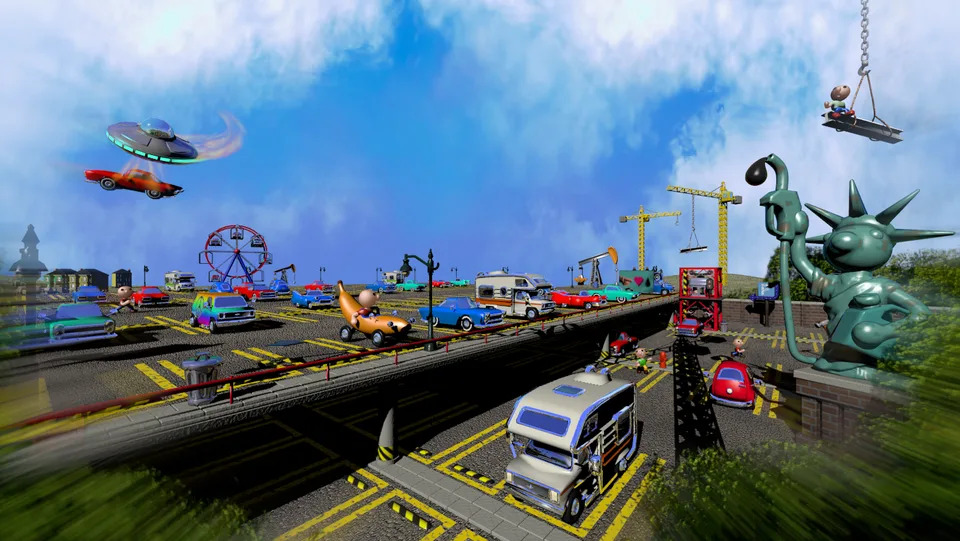
Car Park Capital Guide: How to Build Your Automotive Empire
Master the mechanics of Car Park Capital. Learn how to manage urban planning, fuel production, and citizen needs in this satirical strategy simulation.
Published: Car Park Capital Wiki Editorial Team
Video Guide
IN THIS CITY YOU WILL NEVER HAVE TO LEAVE YOUR CAR AGAIN! - CAR PARK CAPITALTable of Contents
Understanding Car Park Capital
Car Park Capital is a unique entry in the management simulation genre, blending real-time strategy with a biting satirical commentary on modern urban planning. Developed by Hilkojj Interactive and published by the legendary strategy studio MicroProse, the game challenges you to do the unthinkable: dismantle a functioning city and replace it with the "Freedom of Car Dependency."
Unlike traditional city builders where the goal is often to create a sustainable, happy metropolis, Car Park Capital forces you to prioritize asphalt over people. You aren't just building roads; you are actively destroying public transport, evicting tenants, and creating massive parking empires. Whether you are placing propaganda towers to sway public opinion or manufacturing plastic trees to mask environmental decay, the game offers a deep, systemic challenge for players who enjoy complex production chains and management simulation.
The Foundations of Your Parking Empire
Success in Car Park Capital requires a shift in mindset. You are not a city mayor; you are a corporate agent for Big Auto. The fundamental gameplay loop involves identifying valuable urban real estate, clearing it, and maximizing the number of vehicles that can be funneled into the area.
Land Acquisition: Identify high-density areas. Use your budget to buy land and evict the current tenants.
Demolition: Clear the land of homes, trees, and public transport infrastructure.
Infrastructure Development: Use 3D construction tools to build multi-story car parks, drive-thrus, and parking ramps.
Service Integration: Add essential services like restrooms, soda stands, and burger joints to keep motorists satisfied while they park.
Expansion: Link your car parks with efficient entry and exit points to manage traffic flow and increase revenue.
The game features a robust system where citizens have individual needs. While your goal is to push car dependency, you cannot ignore these needs entirely. If your citizens are hungry, thirsty, or need to use the restroom, they need to be able to do so without leaving their vehicles. This is where the "drive-thru" mechanics become essential.
Managing Needs and Production Chains
A common mistake new players make is focusing solely on parking spaces. However, Car Park Capital is a production simulation at its core. You must manage a variety of interconnected systems to ensure your empire remains profitable.
The Automotive Economy
You need to create demand for cars. This is achieved by selling vehicles to your citizens. Once they have a car, they need fuel. Your supply chain must include:
Oil Drilling: Extracting crude oil from the land.
Refining: Transporting oil to refineries.
Distribution: Supplying your gas stations.
If your supply chain breaks, your motorists will be stranded, which leads to abandoned cars. Abandoned vehicles are a major issue; they clutter your parking lots, lower property values, and increase "civil unrest" among your citizens. You will need to invest in tow trucks and junkyards to clear these wrecks efficiently.
Keeping Citizens "Happy"
Citizens in Car Park Capital are not passive. They track their needs, including food, drinks, and entertainment. The game features a "Stat-o-matic" system that allows you to monitor these needs in real-time.
Tip
The Plastic Tree Solution: When you inevitably demolish local parks and forests, citizens will become upset. Instead of planting real trees, you can manufacture "plastic trees" in your factories. These provide a green aesthetic that helps reduce civil unrest, proving that in this game, appearance often matters more than reality.
Dealing with Dissent and Public Transport
As you pave over the city, you will encounter resistance. Protesters will appear, blocking your businesses and negatively influencing other citizens. You must handle this dissent to maintain your profitability.
Suppressing Protests
When citizens start to object to your construction projects, you have a few tools at your disposal:
Riot Police: Deploying police forces can disperse protesters who are blocking your businesses.
Propaganda Towers: These structures are vital for shaping public opinion. They remind citizens why parking lots are "good business" and can help mitigate the anger caused by destroying their neighborhoods.
Distraction: Sometimes, simply providing more amenities—like a Ferris wheel or a drive-thru burger joint—is enough to distract the populace from the fact that you just demolished their bus stop.
Defeating Public Transportation
One of the most satisfying (and challenging) aspects of the game is dismantling the city's existing public transport. Trains and subways are your primary competitors. They move people efficiently, which is the antithesis of your goal. You must convince passengers that true freedom comes with four wheels and a monthly parking bill. By strategically building car parks around transit hubs and making driving the only viable option, you can effectively "defeat" public transport and capture the entire market.
Advanced Tips for Aspiring Magnates
According to community observations and gameplay analysis, the most successful players are those who treat the map as a puzzle. Here are some advanced strategies to help you scale:
Big Box Stores are Key: Don't just build parking lots; build destinations. Big Box grocery stores and hardware stores act as magnets for traffic. The more traffic you attract, the more parking you can sell.
Leverage Loans: Don't be afraid to take out loans to expand. If you have a clear plan for a large parking complex, the revenue from a properly optimized traffic flow will quickly pay off the debt.
Optimize Traffic Flow: Traffic jams can actually be a good thing if they are occurring within your paid parking zones, but uncontrolled congestion outside your empire can lead to gridlock. Use the 3D construction tools to build bridges and ramps to manage flow.
Don't Ignore the "Stat-o-matic": Keep a close eye on your heat maps. If a specific area is showing high "unrest," identify the cause immediately. Is it abandoned cars? Lack of fuel? Or perhaps a nearby bus stop you haven't destroyed yet?
Essential Structures
Carousels: High-traffic generators that make people want to buy cars.
Drive-Thru Toilets: A necessary evil to keep motorists from leaving their cars.
Police Patrols: Essential for keeping protesters from disrupting your revenue streams.
Propaganda Towers: Use these to keep your citizens docile and pro-car.
FAQ
Is Car Park Capital a realistic urban planning simulator?
No, it is a satirical management simulation. While it features complex systems like traffic, production chains, and citizen needs, the premise is intentionally absurd—focusing on extreme car dependency rather than sustainable urban development.
How do I handle abandoned cars?
Abandoned cars occur when citizens cannot meet their needs or when fuel supply chains are disrupted. You must build junkyards and deploy tow trucks to clear these vehicles, as they negatively impact the happiness of your citizens and the efficiency of your parking lots.
What happens if I don't destroy the public transport?
If you leave public transportation intact, it will continue to move citizens efficiently, which reduces the demand for your parking services and cars. To maximize your profit and achieve the "Freedom of Car Dependency," you must actively dismantle these systems.
Can I build in 3D?
Yes, the game features 3D construction tools that allow you to take your parking ambitions into the sky. You can build multi-story car parks and complex ramps to maximize the use of vertical space in your city.
Car Park Capital offers a refreshing, albeit cynical, take on the city-building genre. By focusing on the mechanics of traffic, consumption, and corporate greed, it provides a deep experience for players who enjoy "min-maxing" their way to an asphalt-covered utopia. As the game continues its development in Early Access, expect the systems of production and traffic management to become even more intricate.